
Metricgram vs Patreon: Better For Paid Communities, Memberships, And Telegram?
Patreon and Metricgram both help creators monetize audiences, but they solve very different layers of the business. This comparison explains where Patreon wins, where Metricgram wins, and when Telegram changes the decision.
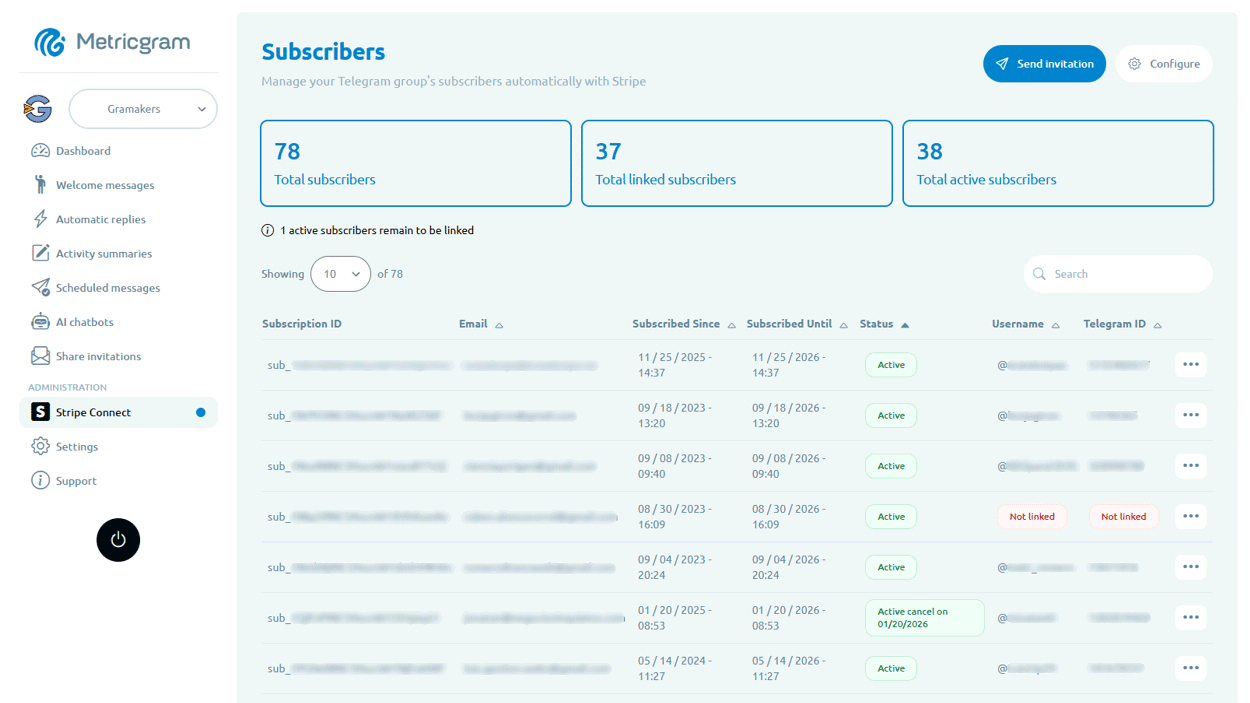
Live directory
Browse Metricgram's curated Telegram directory to find active communities by category and language, and see how leading groups position their listings.
Open directoryPatreon and Metricgram live at different layers
This comparison is easy to misunderstand.
Patreon and Metricgram do overlap commercially. Both help creators monetize and organize access around a paying audience.
But they are not trying to own the same layer.
Patreon is a creator membership platform.
Metricgram is a Telegram-native community operations platform with monetization capabilities.
That means the right decision depends less on "which brand is bigger" and more on where your business actually lives.
Short version
Choose Patreon if you want:
- a hosted membership business;
- creator page plus payments plus audience tools in one place;
- native Patreon community tools and content delivery;
- a platform where the membership itself is the center of gravity.
Choose Metricgram if you want:
- Telegram to be the live community layer;
- stronger community operations after someone becomes a paying member;
- automation, analytics, and onboarding inside Telegram;
- less dependence on Patreon as the place where the relationship happens.
Ready to improve your Telegram group? Start your 14-day Metricgram trial.
Start free trialWhat Patreon officially offers today
Patreon's official pricing and help center pages highlight:
- monthly and annual memberships;
- digital product sales;
- audience and growth insights;
- community tools like chats, polls, and comments;
- community chats for paying members;
- creator pricing that now depends heavily on whether you are on a legacy plan or the newer standard plan.
Patreon's fee model has changed over time.
Patreon's help documentation says:
- new creators publishing after August 4, 2025 move to a standard 10% platform plan;
- many earlier creators remain on legacy plans if they keep eligibility;
- payment processing, taxes, and possible currency conversion fees are separate considerations on top.
That means there is no single universal Patreon fee answer anymore.
What Patreon is really good at
Patreon is strong when the membership business itself needs a home.
It works well for:
- hosted membership pages;
- creator-centric audience management;
- selling recurring membership plus some digital products;
- keeping content and member access centered in Patreon;
- creators who want community as an extension of a Patreon membership product.
Patreon's own help center also makes clear that community chat spaces are available for paying members, with up to ten chat spaces and member profiles inside the Patreon environment.
That is useful if you want community without leaving Patreon's ecosystem.
What Patreon is not great at
Patreon is less ideal when:
- Telegram is where your audience actually wants to gather;
- fast chat matters more than a hosted creator hub;
- the group itself is the product experience;
- you need Telegram-native workflows, not Patreon-native ones;
- you want the live relationship layer to happen outside Patreon's app.
Patreon can help you sell membership.
It is not a Telegram community operating system.
Where Metricgram wins
Metricgram is stronger when your community lives in Telegram and the hard part is not "how do I publish a membership page?"
The hard part is:
- how new paying members are welcomed;
- how access flows stay clean;
- how admins stop doing repetitive work;
- how activity is measured;
- how the Telegram group stays healthy and organized over time.
That is why Metricgram's strength lives in:
- welcome flows;
- activity and analytics;
- automatic replies;
- scheduled messages;
- daily reports;
- Telegram-native access operations.
Hosted membership vs Telegram-native community
This is the core tradeoff.
Patreon is strongest when you want the business to live on Patreon.
Metricgram is strongest when you want the community to live on Telegram.
Those are not the same operating models.
If your creator business is:
- content-first;
- platform-hosted;
- centered around Patreon as the membership destination,
then Patreon is often the right anchor.
If your business is:
- community-first;
- conversation-heavy;
- driven by Telegram access, support, and group energy,
then Patreon is often only one piece, and sometimes the wrong center entirely.
When creators outgrow Patreon-led community
Many creators do not outgrow Patreon for payments.
They outgrow Patreon as the place where the live relationship happens.
That usually occurs when:
- paying members want faster interaction;
- the creator runs launches, cohorts, or recurring live support;
- community retention matters more than post delivery alone;
- members expect more conversation than comments and occasional chat can provide.
That is the moment Telegram becomes much more attractive.
What matters most
Patreon is excellent for building and monetizing a creator membership business.
Metricgram is better when the live community layer belongs in Telegram and needs real operations behind it.
So the comparison is not really "which tool is better?" It is whether you want Patreon to be the home or Telegram to be the place where the community actually lives.
Ready to manage your Telegram group with Metricgram?
Automate tasks, track analytics, and grow your community with a 14-day free trial. No credit card required.
Start free trialGet weekly Telegram community tips
Join community managers who receive our best tips, guides, and product updates.
You may also like
Telegram For Educators: How To Run Cohorts, Student Communities, And Office Hours Without Replacing Your LMS
Telegram is a strong fit for educators when it is used as the live layer around a course or training business. This guide explains how to use it for cohorts, student communities, office hours, and support without turning it into a substitute for your LMS.
Telegram MCP Server: Give AI Agents the Full Telegram Bot API, Safely
What a Telegram MCP server is, why wrapping the Telegram Bot API for AI agents is harder than it looks, and how Metricgram exposes 70+ Bot API methods as secure, group-scoped MCP tools.