
How to Use Telegram Bots In Real Communities, Not Demos
Telegram bots are useful for far more than `/start`. This guide explains how bots are used in real groups for onboarding, moderation, support, and paid community workflows, and where a simple bot stops being enough.
Live directory
Browse Metricgram's curated Telegram directory to find active communities by category and language, and see how leading groups position their listings.
Open directoryA Telegram Bot Is Not A Strategy By Itself
Many people learn bots in the most superficial possible way:
- create bot with BotFather;
- send
/start; - maybe add one or two commands;
- call it automation.
That is not how bots create real value in communities.
Telegram's official bot documentation makes it clear that bots are special accounts with automated behavior, API access, commands, and webhook or polling-based integrations. The interesting part is not that bots exist. The interesting part is how they fit into actual community workflows.
What Bots Are Good At
Bots are strongest when the task is:
- repeatable;
- rules-based;
- time-sensitive;
- annoying to do manually every day.
That is why they work well for:
- onboarding;
- FAQs;
- moderation helpers;
- notifications;
- structured commands;
- access-related workflows;
- repetitive support actions.
The more repetitive the task, the more useful the bot becomes.
Ready to improve your Telegram group? Start your 14-day Metricgram trial.
Start free trialHow Bots Are Actually Used In Groups
In real Telegram groups, bots are often used for one of five jobs.
1. Onboarding
A bot can help new members understand:
- where to start;
- what the rules are;
- how to unlock value fast;
- which commands or links matter first.
2. Moderation support
Bots can support admins with:
- anti-spam flows;
- keyword blocking;
- repetitive enforcement actions;
- reducing the amount of manual cleanup.
3. Navigation and commands
Some groups become easier to use when members can trigger actions with commands instead of asking admins for everything.
4. Notifications
Bots are useful for event reminders, updates, alerts, or structured operational messages.
5. Access and membership workflows
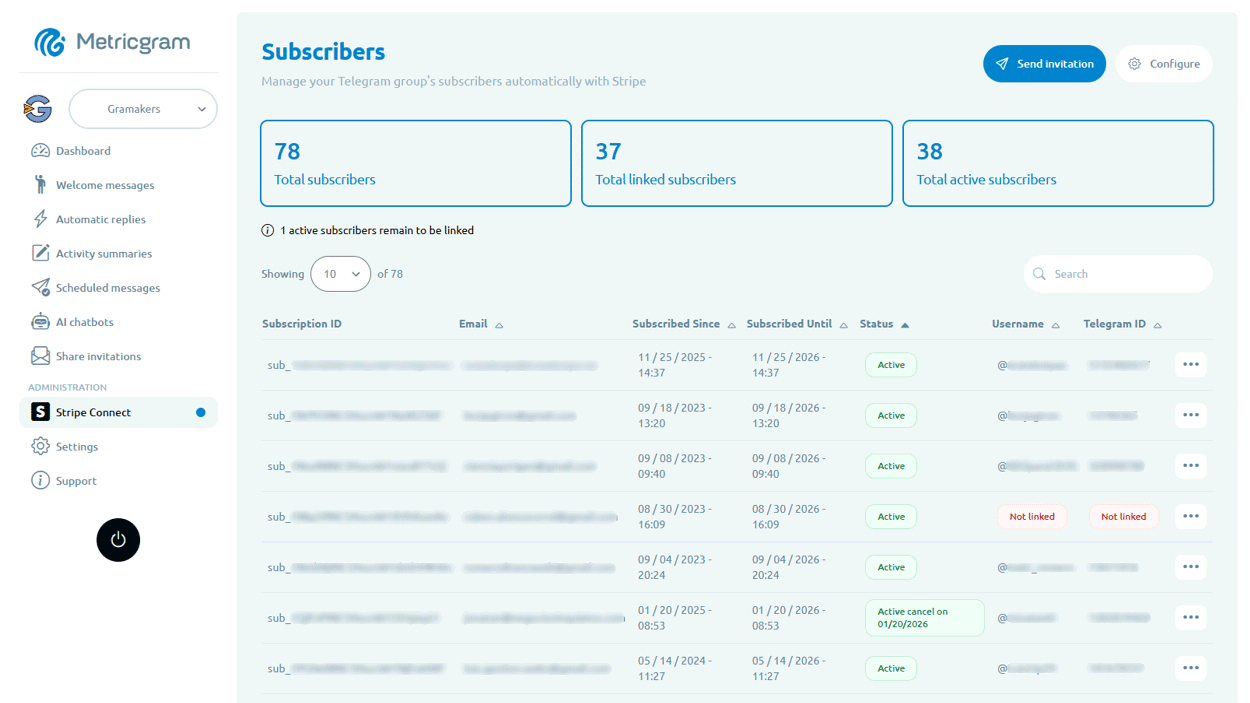
This is where bots become commercially important.
In private or paid groups, bots can be part of the flow around:
- entry;
- verification;
- onboarding;
- retention communication;
- removal when access should end.
What Bots Are Bad At
Bots are not a magic substitute for product thinking.
They are bad at solving a vague problem with no defined process behind it.
Common mistakes:
- adding a bot without a clear job;
- expecting a bot to fix weak onboarding by itself;
- treating every admin problem as "we need a bot";
- building one oversized bot for ten unrelated jobs;
- confusing a bot with a complete access system.
A bot is an instrument. It still needs a workflow.
The Difference Between A Bot And An Operations Layer
This distinction matters a lot.
A simple bot may:
- answer commands;
- send messages;
- react to triggers;
- help with moderation.
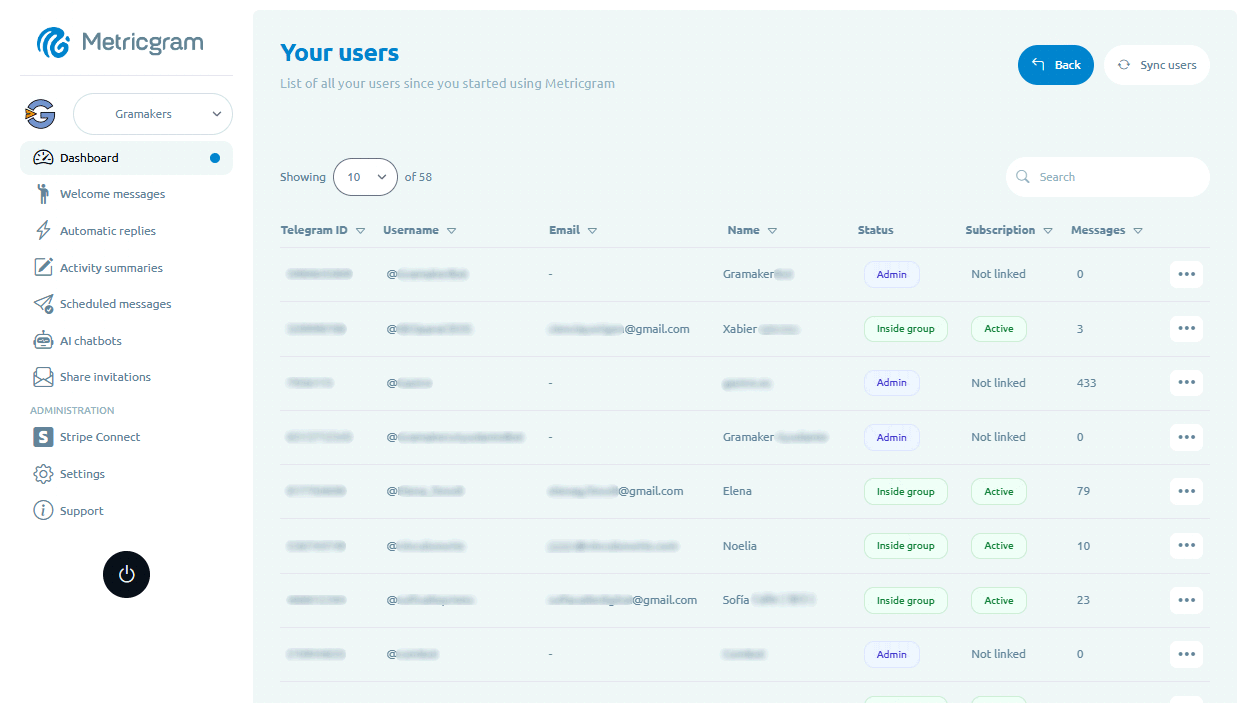
But a community operations layer has to handle things like:
- who belongs in the group;
- who paid and who cancelled;
- what onboarding state someone is in;
- what happens when access should be revoked;
- how recurring admin work gets reduced.
Bots can be part of that.
They are not always the whole thing.
Privacy Mode, Permissions, and Scope Still Matter
Telegram's official bot docs explain privacy mode and group behavior clearly: bots in groups do not automatically see everything unless their mode and permissions allow the right workflow.
That means useful bot usage is never only about commands. It is also about:
- what the bot can see;
- what the bot is allowed to do;
- whether its role is appropriately scoped.
Over-permissioned bots create risk.
Under-permissioned bots create confusion.
Where Metricgram Fits
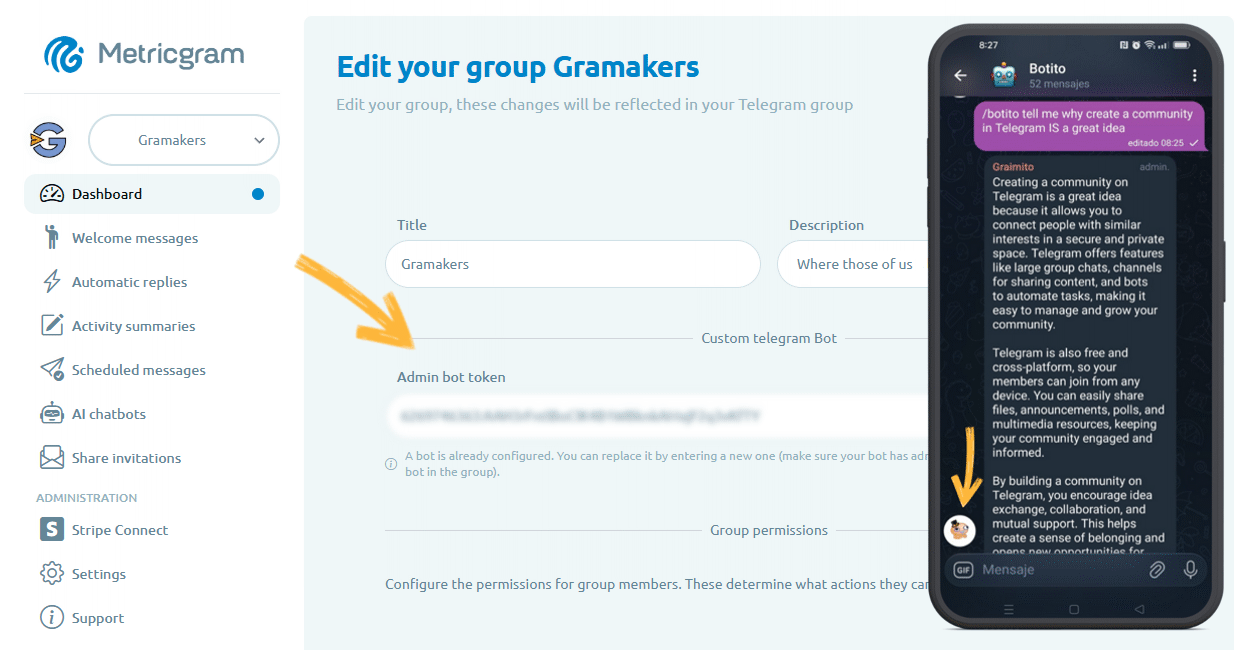
Metricgram is relevant when a Telegram bot is only one piece of a bigger community workflow.
That is especially true in:
- paid communities;
- subscriber access flows;
- onboarding automation;
- recurring admin cleanup;
- private group operations tied to Stripe or similar payment logic.
In that situation, the question is not "should we use a bot?" The question is "what part of this should a bot handle, and what needs a broader operational system?"
What matters most
Using Telegram bots well means attaching them to repetitive, clearly defined community work.
That is where they save time.
If the workflow is unclear, the bot becomes decoration.
If the workflow is clear, the bot becomes leverage.
Ready to manage your Telegram group with Metricgram?
Automate tasks, track analytics, and grow your community with a 14-day free trial. No credit card required.
Start free trialGet weekly Telegram community tips
Join community managers who receive our best tips, guides, and product updates.
You may also like
Telegram For Freelancers: How To Use It For Clients, Leads, And Community Without Creating More Admin Work
Telegram can be useful for freelancers, but only if it has a clear job. This guide explains when to use Telegram for client communication, lead nurturing, paid communities, and peer groups without turning it into operational clutter.
Telegram For Newsletter Creators: How To Add Community, Retention, And Paid Access Without Breaking Your Email Business
Newsletter creators should not force email to do community work. This guide explains when Telegram becomes the right live layer, how it fits with Substack, beehiiv, or Ghost, and how to operate it without manual access chaos.