
What a Telegram Community Manager Actually Does and Why The Role Breaks Without Systems
A Telegram community manager does far more than reply to messages. This guide explains the real responsibilities, daily workflows, success metrics, and where manual community work stops scaling.
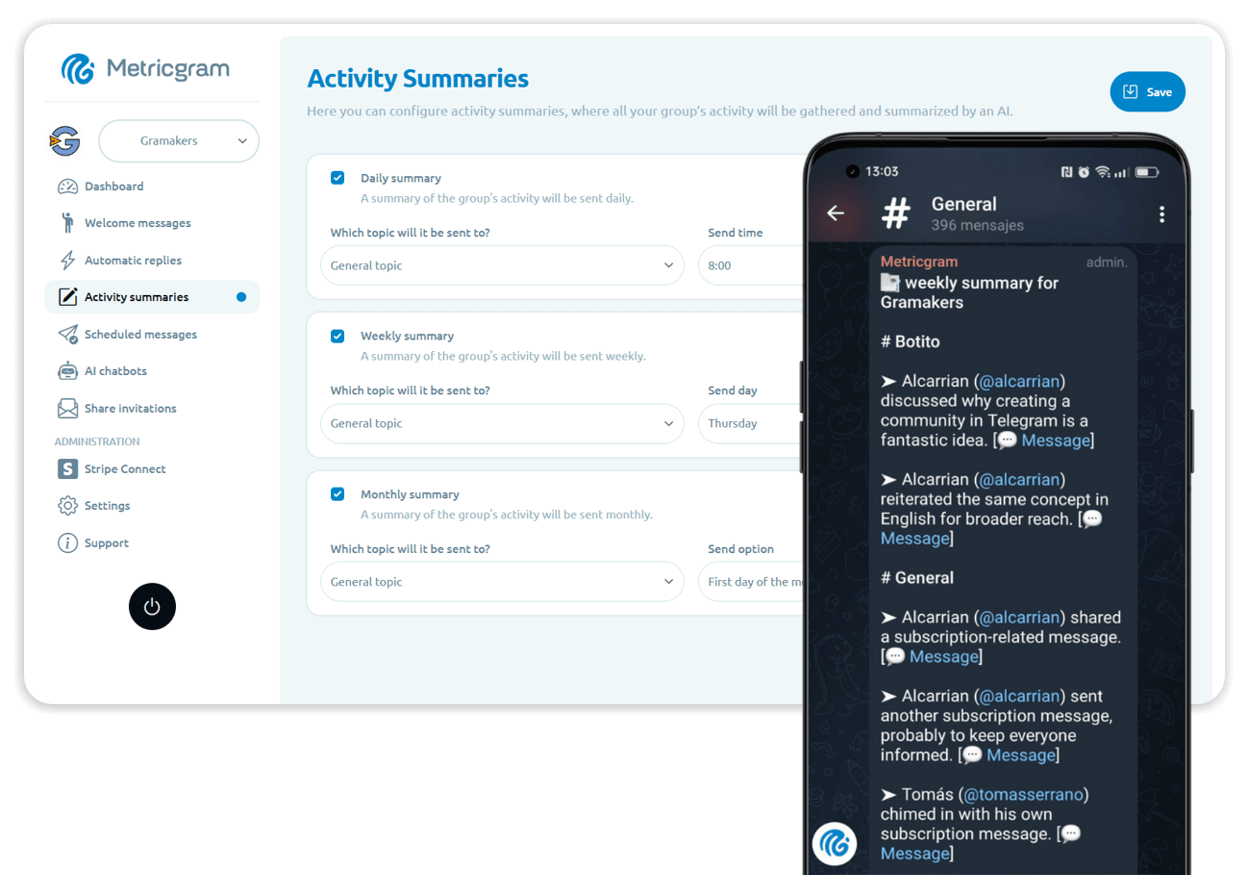
Live directory
Browse Metricgram's curated Telegram directory to find active communities by category and language, and see how leading groups position their listings.
Open directoryThe role is usually bigger than the title
In many Telegram communities, there is no formal "community manager" title.
But the role still exists.
It may be handled by:
- the founder;
- a moderator;
- a support lead;
- an operations person;
- a creator who is still doing everything personally.
The label changes. The work does not.
A Telegram community manager is the person making sure the group remains useful, healthy, and operationally stable as people join, participate, pay, leave, and ask for help.
The role goes beyond posting
The role is often misunderstood as:
- answering messages;
- writing announcements;
- calming down conflicts.
That is only a small part of the job.
In practice, Telegram community management includes:
- onboarding new members;
- enforcing participation norms;
- handling moderation and edge cases;
- coordinating admins and permissions;
- maintaining recurring communication cadence;
- reducing noise and improving clarity;
- helping members find value fast enough to stay engaged;
- handling access and support issues in paid or private groups.
This is why the role becomes operational very quickly.
Ready to improve your Telegram group? Start your 14-day Metricgram trial.
Start free trialWhat Telegram makes possible
Telegram's official documentation gives communities a serious operating surface:
- supergroups that scale far beyond small chats;
- granular admin rights;
- invite links and join requests;
- restrictions on specific users;
- bots, scheduled messages, and structured controls.
That means a Telegram community manager is not managing a basic chat thread. They are managing a system with real rules, permissions, access points, and growth pressure.
The daily work
In real communities, the daily work often looks like this:
Member flow
- welcoming or orienting newcomers;
- answering the same access questions;
- checking whether members belong in the right space;
- reducing confusion around where to post or what to do next.
Moderation
- removing spam;
- handling disruption early;
- spotting repeated friction before it becomes a pattern;
- adjusting permissions or restrictions when needed.
Communication
- posting reminders;
- pinning the right information;
- keeping the group from becoming silent or chaotic;
- maintaining a rhythm that feels intentional.
Operations
- coordinating with billing or access logic;
- managing invite flows;
- cleaning up cancelled or expired members;
- making sure important admin work does not live only in memory.
A weekly rhythm that keeps the role manageable
A lightweight routine helps a manager notice patterns without watching every message all day.
| When | Review | Decide |
|---|---|---|
| Each workday | Pending join requests, unanswered member questions, reported abuse, and messages due to publish | Handle urgent cases and assign anything that needs another person |
| Once a week | Member joins and exits, activity by period, repeated questions, and unresolved support issues | Choose one friction point to fix and name an owner |
| Once a month | Admin and bot access, pinned guidance, welcome content, and recurring workflows | Remove access that is no longer needed and update the runbook |
For a small team, one person can hold several roles, but every critical task needs a backup and an escalation path. State when members can expect a reply, what counts as urgent, and who handles it if the primary manager is away. That turns "someone should look at this" into an operation the team can actually hand over.
What good performance actually looks like
A strong Telegram community manager is not measured only by message volume.
Good performance usually looks more like:
- new members understand the space quickly;
- support load decreases instead of growing endlessly;
- moderators are not constantly reacting to avoidable issues;
- paying members feel the group is worth staying in;
- the team does not need to manually fix the same workflow every week.
That last point matters a lot.
A community manager can be highly competent and still burn out if the system around them is badly designed.
Where the role usually breaks
The role starts to fail when the community becomes dependent on human memory instead of systems.
Warning signs:
- one person remembers all the exceptions;
- onboarding happens differently every time;
- invite and removal flows are manual;
- admin rights are messy;
- support questions repeat endlessly;
- community health depends on someone always being online.
At that point the role is overloaded, not underperforming.
Where Metricgram Fits
Metricgram is relevant when Telegram community management becomes too repetitive and operationally heavy to run cleanly by hand.
That often includes:
- paid groups;
- subscriber access;
- onboarding flows;
- recurring admin cleanup;
- membership removals after cancellation;
- too much operational coordination sitting with one human operator.
In that situation, the goal is not to replace the community manager. It is to stop wasting the community manager on work a system should handle.
What matters most
A Telegram community manager is more than a chat moderator.
The role sits at the intersection of:
- member experience;
- moderation;
- communication;
- permissions;
- operations;
- retention.
When the systems are clean, the role creates leverage.
When everything is manual, the role becomes a bottleneck.
Ready to manage your Telegram group with Metricgram?
Automate tasks, track analytics, and grow your community with a 14-day free trial. No credit card required.
Start free trialGet weekly Telegram community tips
Join community managers who receive our best tips, guides, and product updates.
You may also like
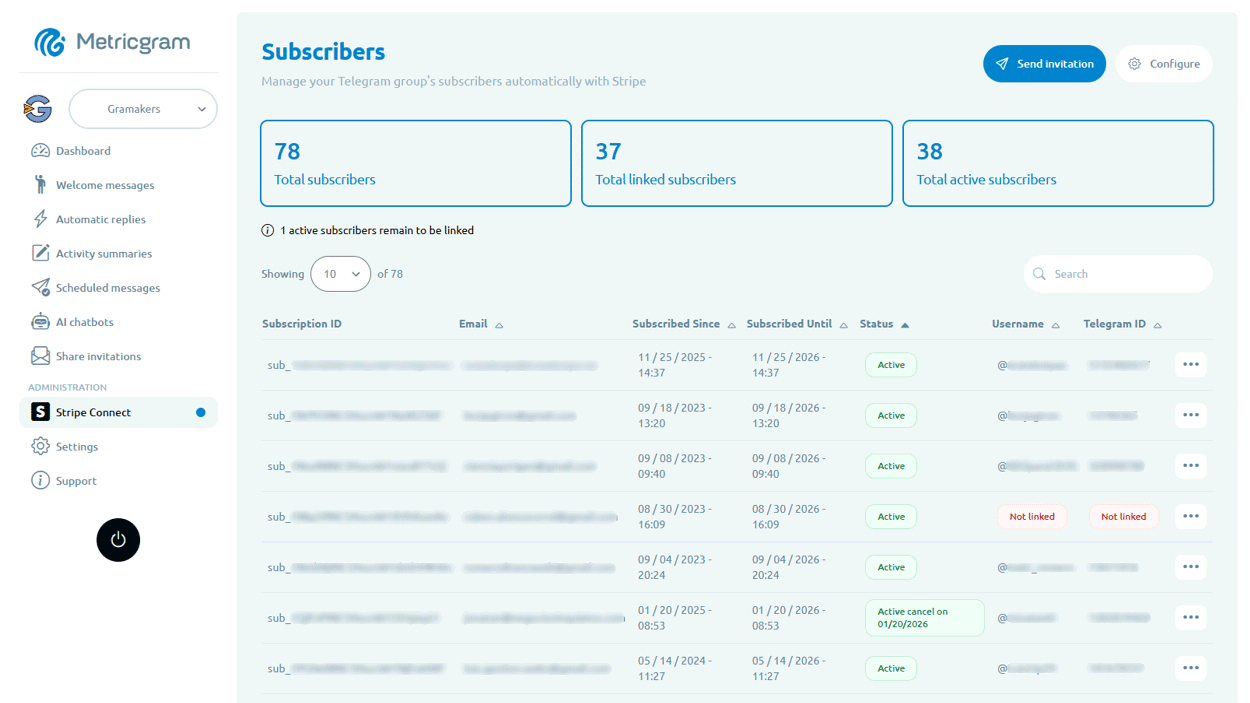
Telegram For Educators: How To Run Cohorts, Student Communities, And Office Hours Without Replacing Your LMS
Telegram is a strong fit for educators when it is used as the live layer around a course or training business. This guide explains how to use it for cohorts, student communities, office hours, and support without turning it into a substitute for your LMS.
Telegram MCP Server: Give AI Agents the Full Telegram Bot API, Safely
What a Telegram MCP server is, why wrapping the Telegram Bot API for AI agents is harder than it looks, and how Metricgram exposes 70+ Bot API methods as secure, group-scoped MCP tools.