
Telegram For Podcasters: How To Build Listener Community, Paid Access, And Launch Momentum Beyond The RSS Feed
Podcasts are great for trust and habit, but weak for direct listener interaction. This guide explains how podcasters can use Telegram for launch rooms, paid communities, and listener retention without confusing it with podcast hosting.
Live directory
Browse Metricgram's curated Telegram directory to find active communities by category and language, and see how leading groups position their listings.
Open directoryPodcasts Build Attention. Telegram Builds Proximity.
Podcasting is excellent for:
- trust;
- repetition;
- long-form depth;
- habit with an audience over time.
But podcast feeds are weak at one thing many operators eventually want:
- a direct conversation layer with listeners.
That is where Telegram fits.
Telegram is not there to replace your host, your RSS feed, or your listening apps.
It is there to become the live layer around the audience you already built.
Why Telegram Works So Well Around A Podcast Business
Telegram supports both:
- broadcast;
- conversation.
Telegram's official docs make that split clear:
- channels can broadcast to unlimited subscribers;
- channels can be linked to discussion groups for comments;
- discussion groups turn channel posts into comment threads;
- Telegram also offers a discussion widget that can embed channel discussions on a website.
That is unusually useful for podcasters.
You can publish audio episodes in your usual stack, then use Telegram to create the interaction layer around each release.
Ready to improve your Telegram group? Start your 14-day Metricgram trial.
Start free trialThe Best Use Cases For Podcasters
Telegram is especially useful when it has a clear job.
Examples:
- a listener community around a niche show;
- a private paid group for premium supporters;
- a launch room for a new season or product drop;
- a comments and feedback layer after each episode;
- a community for guests, listeners, and superfans;
- subscriber-only Q and A tied to a paid membership.
The key idea is simple:
the podcast grows trust, and Telegram captures relationship.
What Should Stay In The Podcast Stack
Keep these where they belong:
- hosting;
- RSS distribution;
- analytics on downloads;
- ad insertion;
- public discovery through podcast apps.
Telegram should not replace those.
It should handle:
- reaction;
- direct access;
- community momentum;
- follow-up after episodes;
- discussion between listeners;
- private access for paying members.
That split is cleaner than trying to force every community behavior into email replies or social media comments.
Where Podcasters Usually Get It Wrong
Most podcasters do not fail because Telegram is a bad tool.
They fail because they launch a group with no real operating model.
Typical mistakes:
- posting episode links into a dead group and calling it community;
- mixing casual listeners and paying members with no boundaries;
- having no onboarding or pinned context;
- making access management manual;
- expecting discussion to happen without prompts or structure.
A podcast audience is not automatically a community.
It still needs a container.
Why Telegram Can Beat Other Community Options For Some Shows
Telegram is stronger than many heavier community platforms when:
- the audience is mobile-first;
- speed matters more than polished forum structure;
- listeners want directness;
- the host wants a room that stays alive between episodes;
- the business includes launches, paid memberships, or live support.
That is especially true for:
- niche education shows;
- creator businesses with subscriber tiers;
- market and investing podcasts;
- coaching and business podcasts;
- independent shows with strong audience identity.
Channel Plus Discussion Group Is A Strong Pattern
One of the cleanest setups for podcasters is:
- a channel for announcements and episode drops;
- a linked discussion group for comments and interaction;
- optional private paid group for top supporters or customers.
Telegram's official channels FAQ explicitly notes that linked discussion groups create comment buttons on channel posts.
That means each episode drop can become the start of a structured conversation instead of a one-way post.
Where Metricgram Fits
Metricgram becomes useful when the Telegram side of the podcast business becomes operationally important.
That includes:
- welcomes for new members entering the community;
- automatic replies for repeated listener questions;
- scheduled messages to maintain rhythm between episodes;
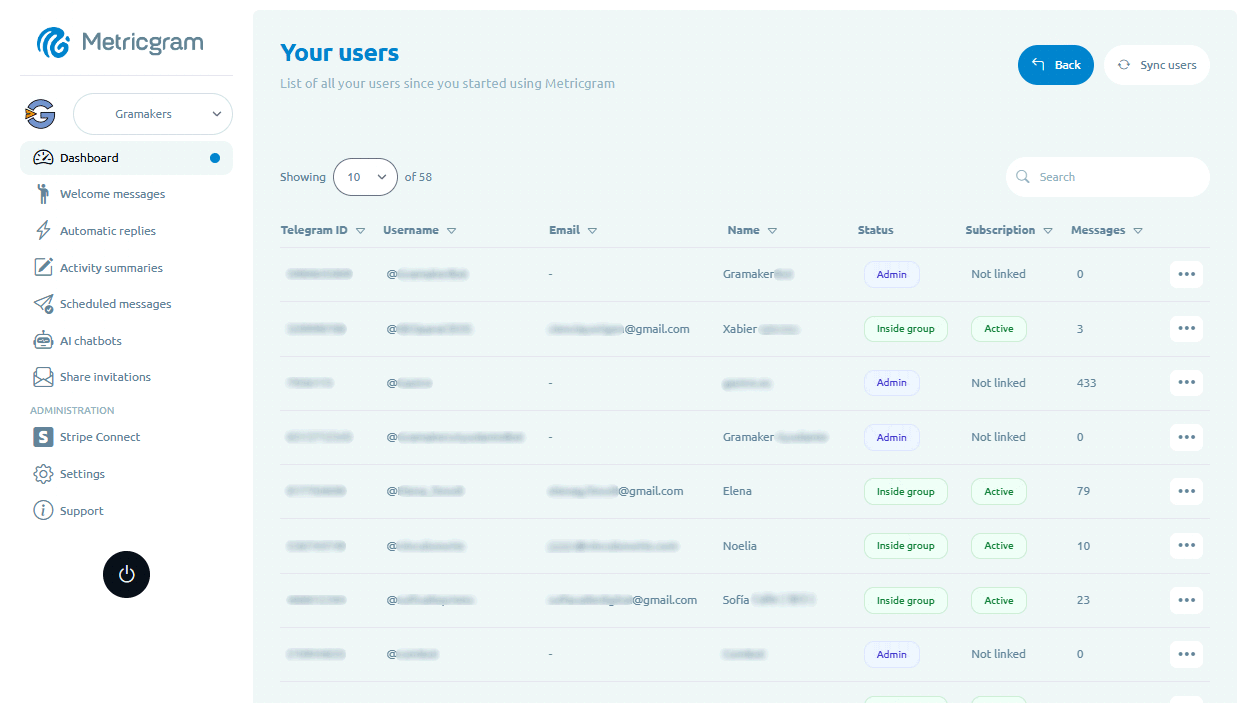
- dashboard visibility into group activity;
- daily reports so the team does not have to watch the chat manually;
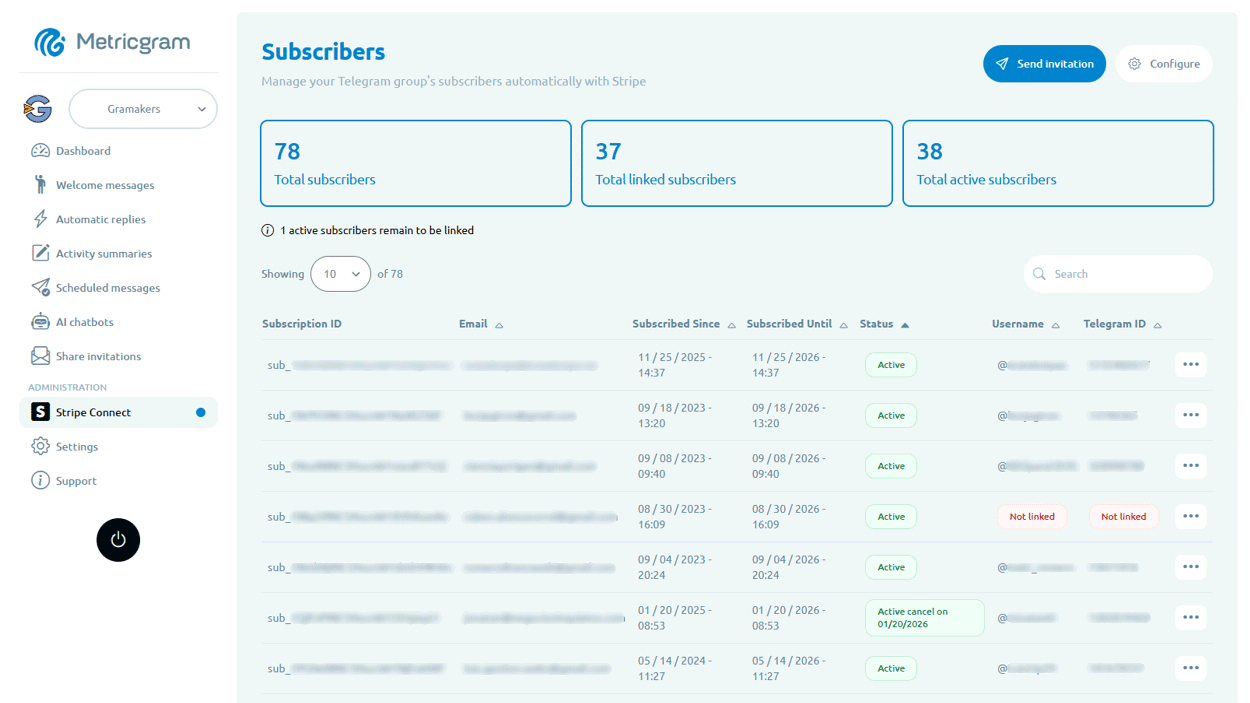
- Stripe Connect flows if paid listener access is part of the model.
That turns Telegram from "an extra chat" into a real listener-community layer.
What matters most
Telegram is not a replacement for podcast infrastructure.
It is the layer that many podcast businesses are missing after they build trust through the feed.
If your audience wants more access, more conversation, and more habit between episodes, Telegram can be one of the strongest additions to the stack.
Ready to manage your Telegram group with Metricgram?
Automate tasks, track analytics, and grow your community with a 14-day free trial. No credit card required.
Start free trialGet weekly Telegram community tips
Join community managers who receive our best tips, guides, and product updates.
You may also like
Telegram For Freelancers: How To Use It For Clients, Leads, And Community Without Creating More Admin Work
Telegram can be useful for freelancers, but only if it has a clear job. This guide explains when to use Telegram for client communication, lead nurturing, paid communities, and peer groups without turning it into operational clutter.
Telegram For Newsletter Creators: How To Add Community, Retention, And Paid Access Without Breaking Your Email Business
Newsletter creators should not force email to do community work. This guide explains when Telegram becomes the right live layer, how it fits with Substack, beehiiv, or Ghost, and how to operate it without manual access chaos.